Future Flights preserves aviation history while equipping at-risk youth with skilled trades, STEM education, and pathways to meaningful careers—one aircraft at a time.
Future Flights exists to preserve aviation heritage while creating transformative opportunities for at-risk youth and young adults. Through hands-on restoration of vintage aircraft, participants develop real-world skills in woodworking, metalworking, fabric work, and finishing—while learning the discipline, documentation habits, and safety culture that employers value.
We believe that meaningful work builds meaningful lives. Every rivet driven, every measurement taken, every inspection passed moves both an aircraft and a young person closer to a brighter future.
Eight core values guide everything we do—from shop floor safety to participant support to donor stewardship.
Physical safety, psychological safety, and aviation safety culture form the foundation of everything we do. Participants learn that safety isn't just a rule—it's a mindset that protects themselves, their teammates, and the aircraft they're restoring.
Many participants come from difficult circumstances. We emphasize dignity, clear boundaries, consistency, and trust-building—creating a structured environment where young people can heal while they learn.
Do it right, measure it, document it, inspect it. Aircraft restoration demands precision and attention to detail—skills that transfer directly to any technical career and build lasting pride in quality work.
Project-based learning produces real competence. Participants don't just read about woodworking or metalworking—they build, measure, troubleshoot, and see the results of their efforts take flight.
Follow approved data, policies, and ethical governance. In aviation, cutting corners can be fatal. We teach participants that honesty and compliance aren't obstacles—they're the foundation of trust.
Responsible care of aircraft, artifacts, tools, donor funds, and public trust. We're preserving aviation heritage for future generations while teaching participants to value and protect what's been entrusted to them.
High support paired with high standards. We meet participants where they are and provide wraparound resources, but we also set clear expectations and measure outcomes. Growth requires both.
Coordinated referrals, wraparound support, and job placement collaboration. We don't work alone—we partner with schools, shelters, counselors, and employers to ensure participants have pathways to success.
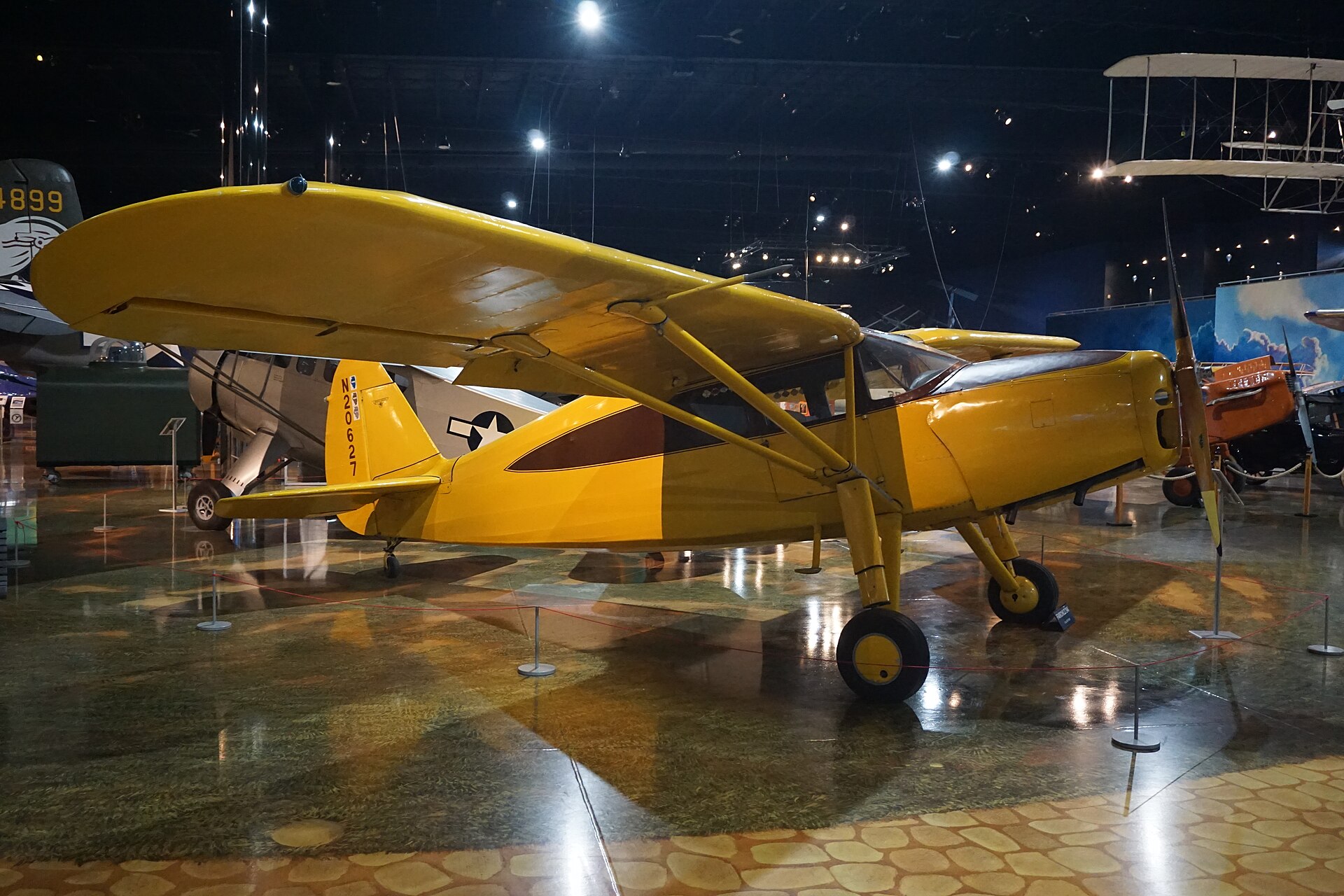
We restore, maintain, and interpret vintage aircraft and artifacts for public education. Through guided tours, demonstrations, community presentations, and educational materials, we share aviation history with future generations.
Learn MoreParticipants learn woodworking, sheet metal forming, fabric work, and finishing through supervised projects. We emphasize work readiness: safety discipline, tool accountability, documentation habits, and quality standards—skills employers need.
Learn MoreOur 18-30 month pathway prepares participants for aviation maintenance careers. From safety fundamentals through supervised practicum, participants build documented experience and transition to formal A&P test preparation when eligible.
Learn MoreHands-on electronics, instrumentation, and communications labs teach measurement, troubleshooting, and systems thinking. These foundational skills prepare participants for high-demand careers in avionics, electronics, and industrial automation.
Learn MoreFuture Flights offers multiple pathways for engagement—whether you're a young person seeking hands-on skills, a community member wanting to learn, or a donor looking to make a direct impact. Explore our programs below.
Restore history. Learn timeless skills. Share the story.
Participants who demonstrate safety discipline and craftsmanship may advance to the Aviation Maintenance Career Pipeline, where they can begin logging supervised experience toward A&P certification eligibility.
Build real skills. Develop work readiness. Earn opportunity.
Graduates demonstrating consistent performance may advance to Heritage Preservation projects or the Aviation Maintenance Career Pipeline. Strong performers receive employer referrals and job placement support.
18-30 months from safety fundamentals to A&P readiness.
Completers are prepared to take FAA written and practical exams for Airframe and Powerplant (A&P) certification—a credential opening doors to careers in aviation maintenance, manufacturing, and related technical fields with median salaries over $65,000.
Hands-on electronics, systems instrumentation, and RF communications fundamentals.
STEM Lab graduates gain foundational math, science, and technical confidence that prepares them for participation in more advanced Skilled-Trades Mentorship, Heritage Preservation projects, or further education in engineering and technical fields.
Your donation helps preserve aviation heritage and provides at-risk youth with skilled trades training, STEM education, and pathways to meaningful careers. Choose a sponsorship level below or make a custom contribution.
Give a young person hands-on access to science, engineering, and problem-solving. Your donation sponsors one student's participation in Future Flights' STEM Labs—an environment where curiosity becomes capability.
Put a complete electronics toolkit into a student's hands — one they can take home. This sponsorship equips a student with a personal electronics workstation for continued learning.
Take-home impact: Students keep these items so learning doesn't stop when class ends.
Sponsor NowHelp a student explore radio, antennas, and real-world wireless systems—hands-on. This sponsorship supports RF-focused STEM Labs where students learn the fundamentals behind modern communications.
Take-home impact: Students keep their workstation tools and kit, building a foundation for careers in electronics and communications.
Sponsor NowKeep the work moving: small things that make big progress possible. Not every needed item is glamorous—many are essential.
A simple service with a big safety impact — and a perfect training entry point. Oil changes teach fundamentals: clean procedures, inspection mindset, correct servicing, and documentation.
Support aviation safety and preservation through structured, supervised inspection work. Annual inspections are essential to keeping aircraft safe and airworthy.
Sponsor one phase of the finishing process that protects history — and teaches professional-level craft. Paint and other finishing processes protect aircraft from corrosion and environmental damage and require disciplined preparation, masking, safety controls, and attention to detail. A typically restoration process requires many, often dozens of individual paint sessions to bring the project to completion. Your donation will cover at least one of those critical steps in the process and give participants a chance to develop and practice highly transferrable skills.
Sponsor the control surface that turns a plane — and builds confidence in craftsmanship. Ailerons, like all the control surfaces on an airplane, require precise fabrication/repair and disciplined inspection. During the restoration of aircraft control surfaces and major structural components, participants learn not only how to do the work, but where they can find the proper guidance on how to perform that work, against which specifications to evaluate the condition of parts, and how the work must be documented in aircraft logbooks. Understanding these data and documentation steps is as important as the physical work itself, and participants learn how being thorough and precise translates into a rewarding sense of accomplishment.
Support safe flight by restoring the surfaces that keep an aircraft stable and controllable. Horizontal and vertical stabilizers demand careful inspection, repair, alignment, and finishing. Part of the airplane knowns as the empenage, stabilize construction materials can include tubular steel, aluminum, and/or wood. As with all other parts of a total restoration, the restoration starts with removing the existing fabric covering, inspecting everything carefully, and replacing any damaged parts before recovering. Some designs are more susceptible to corrosion than others, so type-specific knowledge and careful attention to detail are crucial during these inspections.
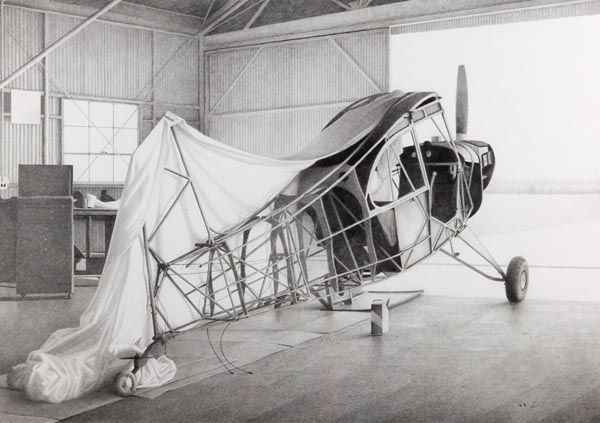
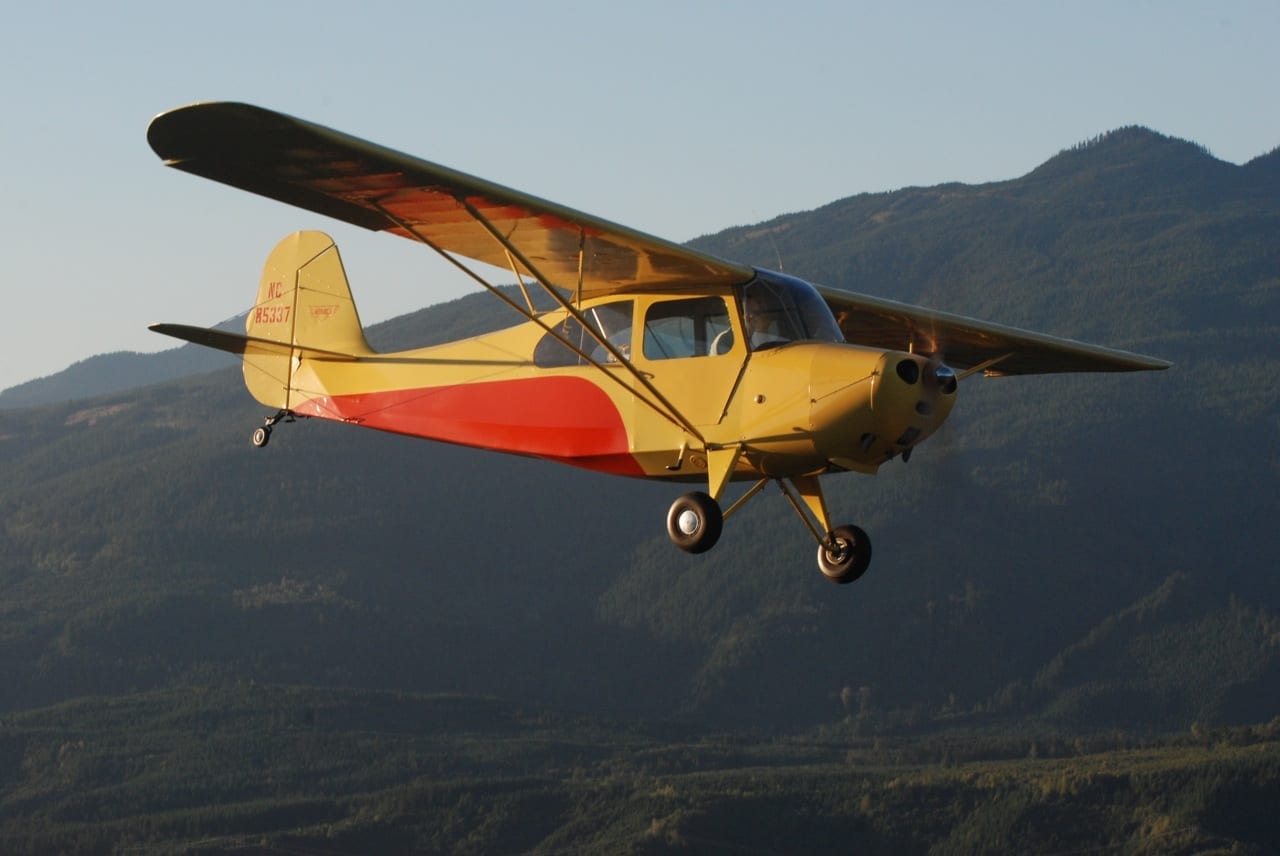
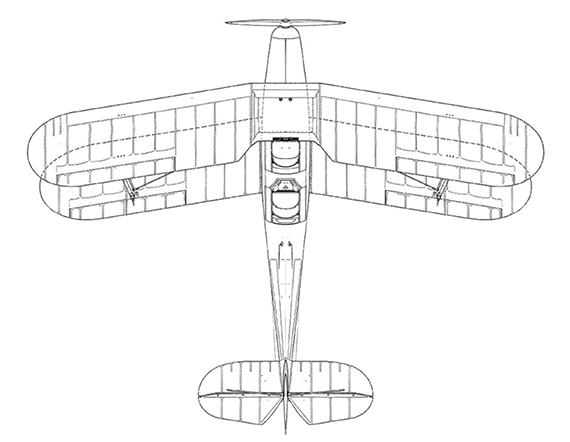
Help restore an significant piece of aviation history — and train the next generation while doing it. A wing offers participants a master class in structure, precision, and safety-critical workmanship. A full wing restoration involves removing existing covering; carefully inspecting all surfaces and structural components for any signs of damage due to overstress, corrosion, or decay; rebuilding or fabricating from scratch any damaged or degrated components (like ribs, spars, compression rods, leading/trailing edges, etc.); painting or finishing those components to protect them from future corrosion; reassembling the wing; covering, and painting. Those last two steps along can take about 100 hours of skilled labor to complete and a total wing restoration -- from start to finish -- can easily exceed a month.
Why it matters: Wing work does more than build transferable skills like inspection discipline, measurement, layout, drilling/deburring, and fabric/metal techniques. It gives participants an opportunity to understand how flight is actually achieved. In concert with our STEM Lab programs, participants learn how the shape of wings leverage Bernulli's principle to generate lift, and what roles other forces like thrust, drag, and gravity play during all phases of flight.
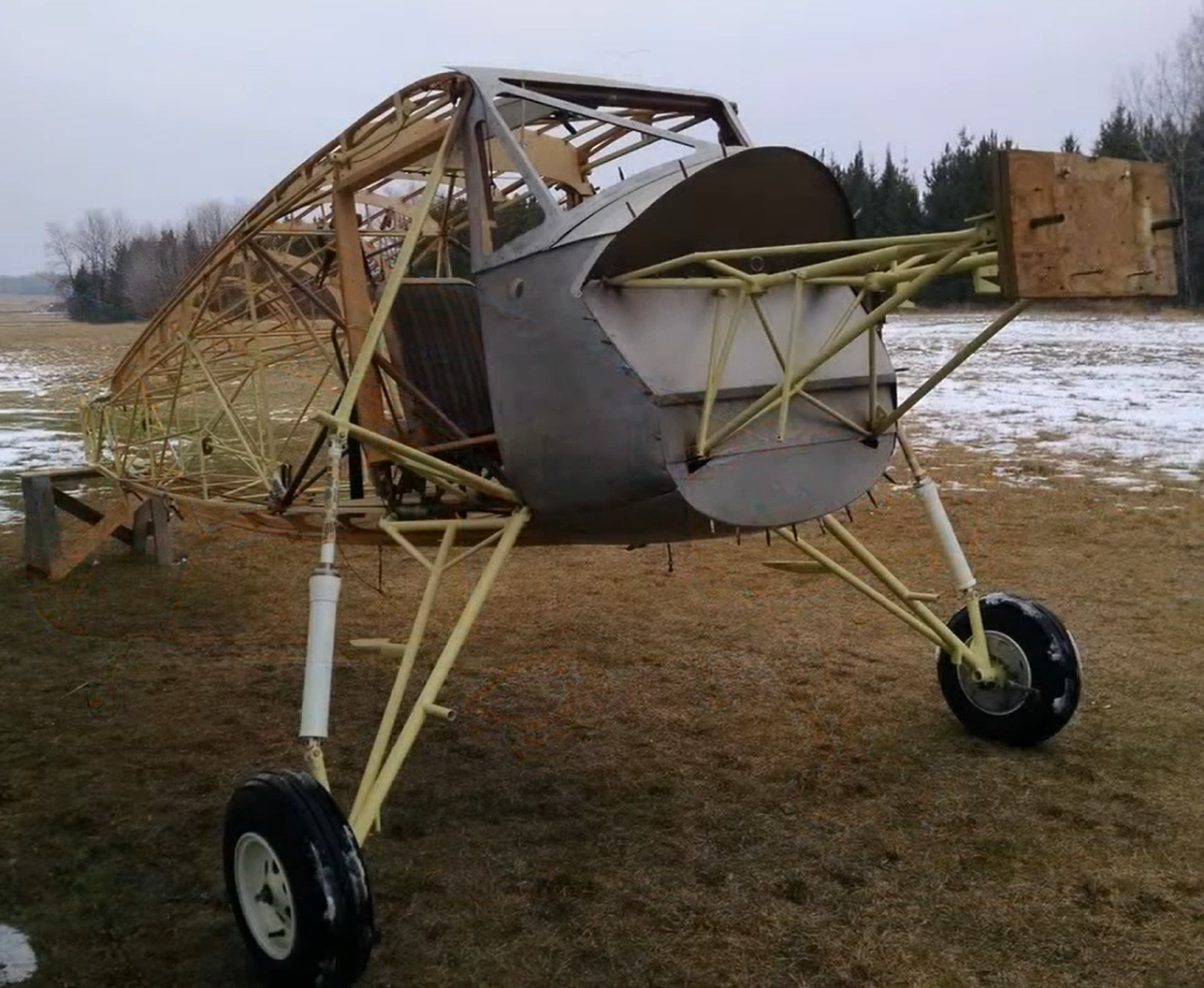
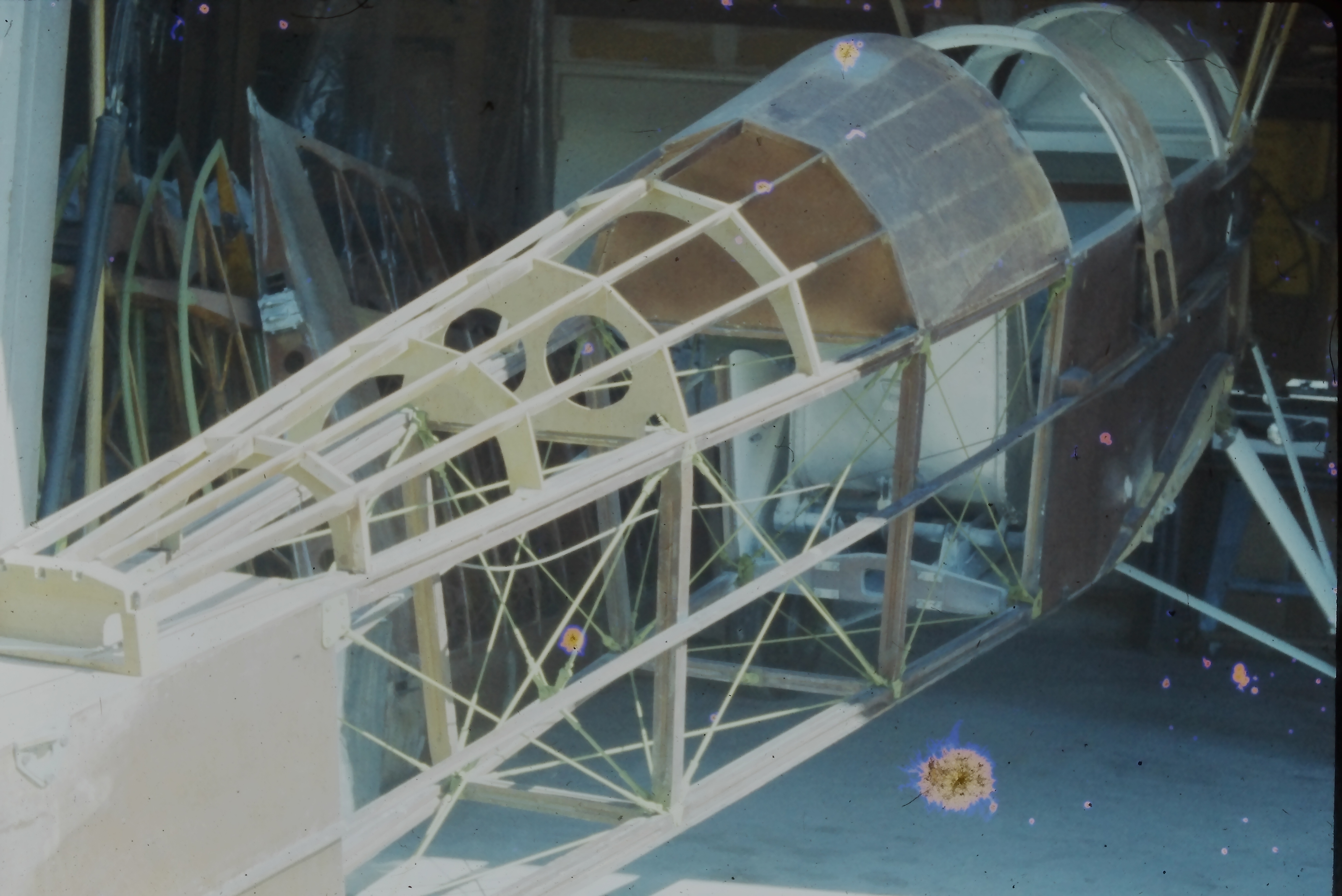
Sponsor NowSponsor the backbone of a historic aircraft—and one of the highest — impact training environments in the shop. Fuselage restoration involves assessing the structural integrity of wood and metal components; the fabrication, installation, and precision alignment of strenght- and form-giving structures like stringers and cross braces; cable and/or pushrod construction and installation to move control surfaces within defined limits; the precise shaping and flaring of rigid fuel lines; corrosion prevention; and, of course, fabric covering and finish work. A total fuselage restoration, not including the engine installation, can easily take a full year.
Why it matters: Working on the fuselage builds systems-level thinking by tieing everything together. Participants learn how each aircraft component interconnects, how the rudder, elevator, and ailerons are actuated by pilot control inputs, and how fuelflow, airflow, and electrical systems support safe, reliable engine operations.
Sponsor NowHelp power the whole process through a mission-critical engine overhaul or rebuild. Not only are engines (powerplants) often the most expensive part of a restoration project, they usually require the most time to complete. This is because only certified aircraft engine repair shops with proper fixtures and tooling — devices that costs hundreds of thoundsands of dollars — are qualified to perform the necessary inspections, machining, and reassembling that ensure manufacture-specified tolerances for serviceability, safety, and reliability. Lead-times for this type of work are often six months or longer, and most shops require large deposits before any work can be scheduled. During the engine removal and reinstallation processes (prior to and after an engine overhall), program participants learn about all aspects of the engine and associated systems. From the basic combustion process to all the systems that keep it running -- fuel flow, ignition, exhaust, cooling, sensors and instrumentation, mounting and shock isoluation, operating limits -- they'll learn about it all. Through all that they'll reinforce their understanding of component cleaning and inspection practices, proper fastener selection, correct torque procedures, aviation-specific research and data validation, and documentation.
Note: Some engine services may require specialized certificated vendors. Future Flights structures work to stay compliant and safety-first.
Sponsor NowWant to give a different amount? Unrestricted gifts give Future Flights flexibility to respond to emerging needs—whether that's safety equipment, unexpected repairs, participant support, or program expansion.
Donate Now
PLEASE NOTE: Messages from this contact form won't be monitored until our doors open later in 2026. For now, feel free to email us at info@futureflights.com if you want to be kept up to date on our progress.
Whether you're interested in volunteering, donating an aircraft, partnering with us for youth referrals, or just want to learn more about our programs—we'd love to hear from you.
Pulaski, Giles County
Tennessee
info@futureflights.org
By Appointment